Jun 04, 2026
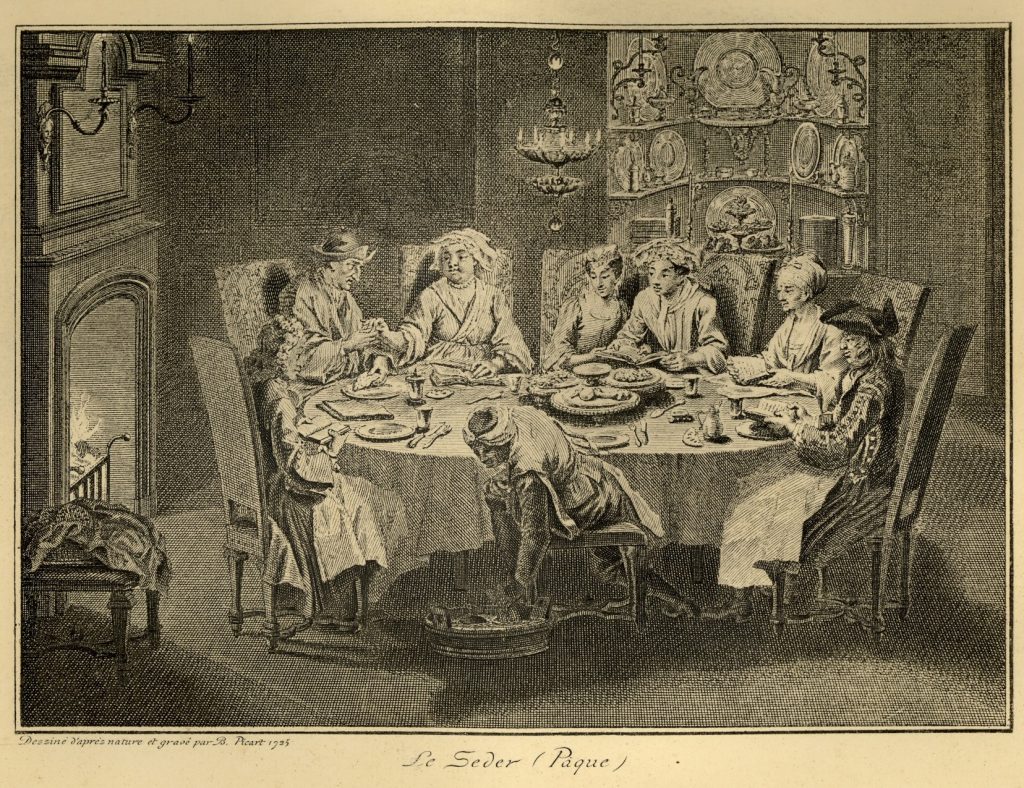
God commanded the Israelites in the Old Testament to observe “Passover,” a tradition commemorating their freedom from slavery in Egypt. The tradition consists of the feast of unleavened bread, the seder dinner, and the “Passover” sacrificial lamb. Surprisingly, God commands the Israelites to observe this ordinance “for ever,” multiple times. As followers of the Old Testament, why don’t Latter-day Saints observe this ancient ordinance as many Jews still do today?
The answer is: we do, in a different way. And returning both to the pages of Exodus and to the modern Jewish observance of the holiday can enlighten the ordinances we now participate in.
Remarkably, many Christians still observed Passover 300 years after Christ died. It wasn’t until Constantine in 306 AD and the Nicean Council in 325 AD that the Easter moved from the Hebrew calendar to the Roman, and anyone who observed Passover was excommunicated. In fact, Constantine harshly separated Catholics from Jews, calling the Jews wicked people, and writing: “We ought not…have anything in common with the Jews,” and to “separate ourselves from the detestable company of the Jews”.
While Latter-day Saints do not observe Passover, there is no doctrinal animosity between the Church of Jesus Christ and the Jewish people. We consider many of our ordinances to be a literal fulfillment and continuation of Old Testament law, which implies some beautiful similarities between Jewish and Latter-day Saint traditions. Of course, today, the two religions exist separately and independently of each other.
After Christ’s death, it was very confusing to figure out what He meant by “fulfilling” the old law, and not doing away with it. There is much debate about whether or not the Last Supper was a “seder” or Passover dinner. Some argue that the Passover was the same day of Christ’s crucifixion, therefore He is the sacrificial lamb, and the Last Supper was not a Passover dinner. One author goes to the length of citing 50 reasons why the Last Supper was not the Passover. Matthew, Mark, and Luke place the Last Supper on the Passover day, but John says the Last Supper is the day before Passover. In Latter-day Saint scripture, the italicized chapter headings side with Matthew, Mark and Luke. Chapter 26 heading in Matthew reads Jesus “keeps the Passover and institutes the sacrament,” and the verses in the chapter compliment this summary. Gale Boyd, a Jewish convert to The Church of Jesus Christ of Latter-day Saints, explains the technicalities of Jewish holidays, placing Jesus’ crucifixion on a Thursday, and the Passover dinner on a Wednesday. This follows the ancient 8-day holiday calendar, instead of the updated 7-day calendar, placing the Last Supper on the anciently understood Passover day. Richard K. Scott wrote an academic paper backing up Gale’s argument with proofs from the Book of Mormon, here.
During the Last Supper, Jesus took the bread (there is debate about whether or not it was unleavened), blessed it, and said “Take, eat; this is my body.” Then he took the cup, gave thanks, and said “Drink ye all of it; For this is my blood of the New Testament.”
Essentially, this is all the information Christians had to go on after Christ’s death in order to understand the Passover is now the sacrament (or communion). It’s no wonder some still observed the “original” Passover tradition. Why wasn’t Jesus more clear? Perhaps the fulness of His teachings were lost. Maybe He didn’t want to risk the people taking the words too literally, and missing the symbolism. Or perhaps He knew it would be a 300+ year adjustment.
Even in 1500, John Calvin and Martin Luther took issue with the Catholic understanding of communion and transubstantiation. Latter-day Saints believe that eventually, when the people were ready for it, God was more clear. The sacrament and ordinances performed in the temple were restored by the prophet Joseph Smith and are a direct fulfillment of ancient covenants. The Book of Mormon, following an Israelite who left Israel and fled to America, also provides extended insights into the law of Moses, it’s fulfillment and purpose, and the institution of the sacrament.
The Old Testament at face value focuses on gaining physical freedom from slavery through God, and returning to the land of their inheritance. In the modern Jewish seder dinner, this is what is celebrated and remembered, as each seder dinner ends with participants repeating: “Next year in Jerusalem.” In the New Testament, Christ pivots the focus from outward to inward. Instead of physical freedom from slavery, His gospel focuses on spiritual freedom from sin. But, the old law was not done away with. Outward ordinances are still important, and understanding the old law can give great depth to the new law. While the Passover turned into the sacrament, the traditional seder dinner can also bring light to covenants Latter-day Saints make in the temple.
The aim of the seder dinner is to bring the story of the Israelites fleeing Egypt to life. For children and adults, the participant is to consider themselves as if they had personally come out of Egypt. As many Jews teach, the Passover story is not just a story of ancient people’s, it’s also our story. The story of fleeing Egypt is much like each of our stories, as we used to live in the promised land (with God), we left that land in innocence and came to Egypt (earth). Eventually we left Egypt to journey back to our ancestral home with all our dead. The goal is to return to the place where the journey began.
This is the story illustrated in a Latter-day Saint temple, though its focus is not on fleeing Egypt, but on Adam and Eve. Each saint is to consider themselves as if they were Adam or Eve. Throughout the seder dinner, prayers are recited as a group, songs are sung, symbolic food is eaten, and anciently, a lamb was slaughtered and eaten. There is an altar in each Latter-day Saint temple, but we symbolically sacrifice a broken heart and a contrite spirit instead of an animal, and covenant to keep the ancient yet fulfilled law of sacrifice, along with four other covenants.
Jewish Rabbi Meir Soloveichik in a lecture about the great Exodus says “the blood on the door is a sacrificial ritual that turns each Israelite home into a temple.” He says the word “pesach” is most often translated as “Passover”, but it is more accurately translated as a “hang over”.
“It refers to God hovering over Israelite homes in Egypt protecting them from the plague. God was not skipping over Israelite houses, He does not need blood on the homes to tell Him which houses to skip.” Similarly, God does not need Latter-day Saints to wear sacred garments in order for Him to know who has made covenants with him. God saves His covenant people, not because they wear the right clothes or have the right door paint, but because they have been given power and redemption through sacred ordinances.
In Exodus, no man is to partake of Passover unless they are circumcised, or cleansed. The Father and Mothers of a Jewish family on the evening of the 13th of Aviv (the first Biblical month) prepare for Passover by searching the entire house thoroughly for leaven. These actions have many parallels to the sacrament. 1 Corinthians 5:8 calls leaven “malice and wickedness,” and footnotes to a scripture in the Doctrine and Covenants which refers to being purged from sin. The Latter-day Saint study manual Come Follow Me refers to leaven or yeast as a symbol of corruption because it spoils easily.
Why is the Festival called the “Feast of Unleavened Bread” in the Bible? “Who names their festival after food?” Rabbi Soloveichik asks. “So they rushed out — and so on the way they had to eat unleavened bread. So what?“
It’s a good question, and Rabbi Soloveichik reveals a political point the festival title makes. “Matzah is bread at the beginning of the process of its production, flour baked immediately after water has been added to it.” The unleavened bread symbolizes the idea that the Exodus from Egypt is only the beginning of the redemption process. The bread has not “achieved its ultimate end” or for Latter-day Saints, it has not reached the full measure of its creation.
Rabbi Soloveichik concludes: “Freedom is not one moment, it is a journey.” The Israelites traveled in the wilderness for forty years, and repeatedly wanted to go back into bondage because it was better than taking personal responsibility for their survival. Even when they were physically freed, they often did not want or understand that freedom. Nevertheless, God in his mercy provided for them in their infant state. It took a long time for them to learn freedom, and we are learning it still.
“Enduring to the end” or the “covenant path,” is a parallel to this ancient journey. Baptism is just the beginning of becoming a “new creature.” In the most recent general conference, Elder Bednar spoke about enduring to the end, and how it can be synonymous with being possessed of the pure love of Christ. Enduring to the end, Elder Bednar says, is not about gritting your teeth, and pushing through challenges — it is the “joyous quest of a lifetime” that we participate in to become more like Jesus Christ. “The Savior’s restored gospel invites us to be spiritually transformed,” Elder Bednar continues, “not merely to improve our behavior.” This is exactly the lesson the Israelites were being prepared to receive.
Freedom as a journey is also exactly what Latter-day Saints simulate in the temple, instead of in a seder dinner. In fact, Latter-day Saints believe that after the Savior died on the cross, he bridged the gap between what we call spirit “paradise” and spirit “prison” — allowing us to do work for the dead. As it reads in Peter, Jesus Christ “went and preached unto the spirits in prison;” literally freeing them through the message of the gospel.
When we do a temple “Endowment” for ourselves or the dead, we travel through the creation story, from the war in heaven, to Adam and Eve, and progressively make covenants with God until we are symbolically ready to meet God again, returning to the “Promised Land.” In a Latter-day Saint temple, the freedom is from the bondage of sin, not from pharaoh. Even when we are spiritually redeemed, we often do not feel worthy of or understand that redemption. The goal is to return to the place where we began, except this time, we are different people.
This journey calls to mind the words of T. S. Eliot:
“We shall not cease from exploration
And the end of all our exploring
Will be to arrive where we started
And know the place for the first time.”